
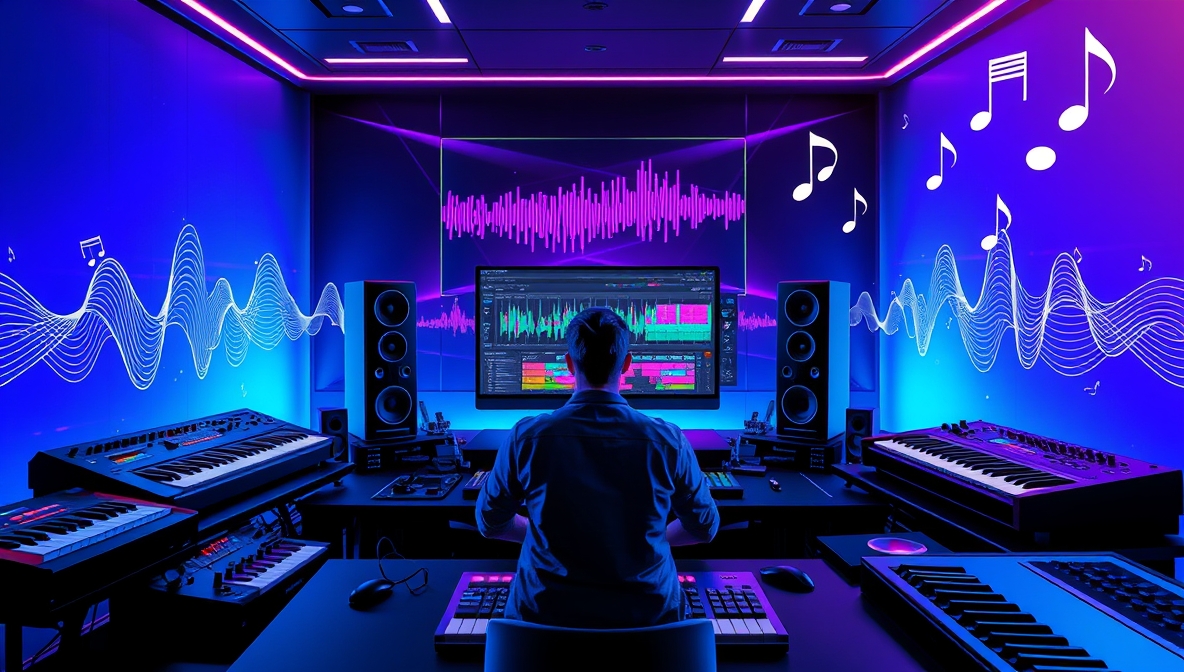
The Ultimate Guide to Electronic Music Production provides essential insights into creating captivating tracks by focusing on key elements such as sound design, arrangement, & mixing techniques. Utilizing powerful software tools like Ableton Live or FL Studio enhances creativity, while understanding synthesis & sampling broadens sonic possibilities. Techniques like layering sounds, automation, & applying effects are crucial for achieving professional quality. Essential tips include regular practice, experimenting with genres, & staying updated with industry trends, ensuring producers can craft unique, polished pieces that resonate with audiences across various electronic music styles.
Ultimate Guide to Electronic Music Production: Tips, Tools, & Techniques. Dive into our Ultimate Guide to Electronic Music Production! Discover easy tips, essential tools, & techniques to create your own unique sound. Let’s get started!

7 Tips To Learn Music Production At Home 10x FASTER!
Ultimate Guide to Electronic Music Production: Tips, Tools, & Techniques
Choosing the Right Digital Audio Workstation (DAW)
When it comes to electronic music production, selecting the perfect Digital Audio Workstation (DAW) is vital. A DAW serves as the software backbone of your music-making process. Different DAWs offer unique features, layouts, & capabilities. Each person must identify which one matches their workflow best. Popular DAWs include Ableton Live, FL Studio, Logic Pro X, & Pro Tools. These tools cater to various styles & preferences. For instance, beginners might appreciate FL Studio for its user-friendly interface. Meanwhile, experienced producers may lean towards Ableton Live for its versatility in live performances. Factors to consider in your choice include:
- Workflow: Does the layout suit your style?
- Features: Are essential plugins & instruments available?
- Compatibility: Does it work with your operating system?
- Community: Is there a support network for learning?
Try demos & tutorials before deciding. This will help you gauge if the DAW can meet your production goals. Remember, the best DAW for one person may not suit another.
| DAW | Best For |
|---|---|
| Ableton Live | Live performance & improvisation |
| FL Studio | Beginners & electronic music |
| Logic Pro X | Mac users & songwriters |
| Pro Tools | Professional audio engineering |
The right DAW enhances creativity. It empowers you to express musical ideas. Invest time in exploring options to make the best choice.
Essential Music Production Tools
A successful electronic music production setup requires essential tools. These tools help streamline your workflow & elevate your sound quality. Key components include audio interfaces, MIDI controllers, & studio monitors. An audio interface connects your computer to the outside world. It enhances audio quality, allowing for recording & playback. Some popular options include Focusrite Scarlett & Universal Audio Apollo. MIDI controllers enable you to create music more intuitively. They often feature pads, knobs, & sliders that allow hands-on control. Look at devices like Akai MPK Mini or Native Instruments Komplete Kontrol for excellent choices. Studio monitors are crucial for mixing & mastering your tracks. They provide a flat frequency response, ensuring accurate sound representation. Yamaha HS series & KRK Rokit are reputable options for any setup. Investing in these tools is essential for music production. Remember that quality matters. Cheaper options may compromise your production quality. Consider your budget but prioritize performance & reliability.
- Audio interfaces improve sound quality.
- MIDI controllers make composition easier.
- Studio monitors ensure accurate mixing.
Selecting the right tools creates an effective workspace. This workspace inspires creativity, leading to better music.
Understanding Music Theory Basics
Even though electronic music production can thrive on experimentation, knowing music theory basics is beneficial. Basic theory includes scales, chords, & rhythm. This knowledge will guide your creativity. Scales form the foundation of melodies. Common scales include major, minor, & pentatonic. Observing how scales work will improve your melodic writing. Chords involve multiple pitches played together. Knowing chord progressions helps shape your song’s emotion. Popular progressions include I-IV-V & ii-V-I. Use these progressions as a starting point in your work. Rhythm impacts the feel of your music. Understanding beat, tempo, & time signatures allows you to craft engaging tracks. Experiment with different rhythms to see what fits your music style. Utilizing music theory can minimize frustrations while producing. You will find that having a structured approach can lead to rich musical ideas.
| Music Element | Description |
|---|---|
| Scales | Basic units of melody formation |
| Chords | Multiple notes played together |
| Rhythm | Timing & pattern of sounds |
Incorporating music theory into your productions can enhance your capabilities. It enriches your sound & elevates your overall production quality. Like many areas in music, practice is crucial to internalizing these concepts.
Sound Design Techniques
Sound design plays a significant role in electronic music production. Crafting unique sounds can differentiate your music. Sound design involves manipulating audio & synthesizing new sounds. Start by exploring different synthesis types like subtractive, additive, or FM synthesis. Experimentation is key. You can create various timbres & textures by adjusting parameters like oscillators, filters, & envelopes. Sampling is another powerful technique. Use samples creatively to layer your sound. Start with an audio clip & manipulate it through pitch shifting, time-stretching, or reversing. And don’t forget, using effects can transform your sounds. Common effects include reverb, delay, distortion, & chorus. Each effect adds a different character, enhancing your production. Practice sound design regularly. With each attempt, you’ll grow more comfortable using tools at your disposal. Innovative sounds add depth to your work.
- Experiment with synthesis types.
- Be creative with samples.
- Use effects to transform sounds.
The world of sound design allows for endless creativity. Make it an integral part of your electronic production.
Arranging Your Music
Arranging is the next step after composing your track. It’s about structuring your music to maintain listener interest. A well-arranged song guides the listener through its sections. Standard song structure includes intro, verse, chorus, bridge, & outro. Consider this as a framework while working on your arrangement. Each part serves its purpose in telling a musical story. Dynamic contrast can enhance your arrangement. Vary the intensity throughout the track by adding or removing elements. Introduce new sounds gradually to keep the audience engaged. Pay attention to transitions between sections. Smooth transitions create a cohesive listening experience. Use automation, effects, or silence to connect ideas seamlessly. Practice arranging different genres. Each genre has its rules & expectations. By studying various arrangements, you can refine your skills & develop your style.
| Song Section | Purpose |
|---|---|
| Intro | Sets the mood & theme |
| Verse | Develops the narrative |
| Chorus | Highlights the main message |
| Bridge | Adds variety before the final sections |
| Outro | Conclusion of the track |
A strong arrangement keeps listeners engaged in your music. Experiment & explore arrangements in your productions.
Mixing & Mastering Basics
Mixing & mastering are vital steps in electronic music production. Mixing involves combining all your elements to create a balanced sound. Mastering is the final polish of the mix for distribution. Start with mixing. Focus on balance between levels, EQ, & panning. Make sure each element has its space. Use equalizers to remove unwanted frequencies & enhance key elements. Reverb & delay can add depth & space to your mix. Applying these effects appropriately helps create a coherent sound. After mixing, move on to mastering. This step ensures your track sounds great on all playback systems. Use compressors, limiters, & EQ in this process. Aim for a consistent loudness across the track. Reference tracks can guide your mixing & mastering process. Compare your mix to professionally produced songs. This allows you to identify areas for improvement.
- Focus on balancing levels & sounds.
- Use EQ to enhance elements & remove unwanted noise.
- Apply reverb & delay for space.
- Ensure consistency in loudness during mastering.
Master mixing & mastering for polished tracks. These steps maximize the quality of your electronic music productions.
Collaborating with Other Artists
Collaboration can bring new ideas into your electronic music production journey. Working with other artists exposes you to fresh perspectives & diverse skills. Collaboration can range from co-writing to full production partnerships. Find artists who resonate with your style. Websites like Soundbetter & Kompoz assist in finding collaborators. Engage with local communities & online forums to expand your network. Set clear expectations early in the collaboration. Discuss goals, timelines, & credit for contributions. Communication ensures that everyone’s on the same page. Embrace each artist’s strengths. Learn from their techniques & styles. Ultimately, you will broaden your musical horizons. Collaboration can also lead to joint releases. This can expand your audience & encourage new listeners to discover your work.
| Platform | Purpose |
|---|---|
| Soundbetter | Find collaborators for projects |
| Kompoz | Work with musicians globally |
| Local Meetups | Network with local artists |
Collaborating with other artists enriches your music. You can create something truly special together.
Promoting Your Music
Creating exceptional music is only part of the journey. Promoting your work is essential for reaching your audience. Utilize various marketing strategies to get your music heard. Social media platforms such as Instagram, Facebook, & TikTok are vital. They allow you to share engaging content & connect with fans. Regularly post updates, behind-the-scenes looks, & snippets of your music. Build a professional website to showcase your portfolio. Offer samples, music links, & contact information for potential collaborations. Streaming platforms like Spotify & SoundCloud are critical for distribution. Focus on using playlists to increase visibility & attract new listeners. Networking with other musicians can lead to promotional opportunities. Collaborate on projects or share each other’s work to reach broader audiences.
- Engage on social media regularly.
- Create a professional website.
- Use streaming platforms to distribute your music.
- Network & collaborate with musicians.
Effective promotion enhances your reach. With a solid strategy, you can grow your audience.
“Creating music is an adventure, shaping it takes heart.” – Amelia Parker
The journey of electronic music production can be exciting. Each aspect contributes to a greater whole. With the right tools, knowledge, & practice, you can create unique & captivating music.

What is the best software for electronic music production?
The best software for electronic music production largely depends on your preferences & workflow. Some popular choices include Ableton Live, FL Studio, & Logic Pro X. Each has its own unique features that cater to different styles of music & production techniques.
What equipment do I need to start producing electronic music?
To start producing electronic music, you typically need a computer, digital audio workstation (DAW) software, a MIDI controller, & headphones or studio monitors. Depending on your focus, you might also consider adding an audio interface & other hardware synths.
How can I learn electronic music production?
Learning electronic music production can be accomplished through various means, including online courses, tutorials on platforms like YouTube, & hands-on practice. Many artists also recommend joining online communities for feedback & collaboration.
What are the basics of music production?
The basics of music production include understanding sound design, arranging tracks, mixing, & mastering. Familiarity with your DAW, knowing how to use various plugins, & grasping music theory can significantly enhance your production skills.
How do you produce a song from start to finish?
Producing a song from start to finish typically involves planning your track structure, creating or selecting sounds, arranging your song, mixing, & finally mastering it for distribution. A structured workflow can help streamline the process.
What are some tips for mixing electronic music?
Some essential tips for mixing electronic music include using EQ to carve out space for each instrument, managing levels to maintain clarity, applying compression to control dynamics, & utilizing reverb & delay to create depth.
What role does sound design play in electronic music?
Sound design is crucial in electronic music, as it involves creating unique sounds that define genres. This includes synthesizing sounds, sampling, & manipulating audio to develop your distinct sonic palette.
Can I produce electronic music on a budget?
Yes, it is entirely possible to produce electronic music on a budget. There are many free or affordable DAWs & plugins available, as well as second-hand gear that can help you get started without breaking the bank.
How important is music theory in electronic music production?
While not strictly necessary, understanding music theory can greatly enhance your production skills. It helps in creating better melodies, harmonies, & arrangements, making your music more engaging & coherent.
What genres can I create with electronic music production?
Electronic music encompasses a wide range of genres, including techno, house, drum & bass, trance, dubstep, & more. The tools & techniques used in production can be applied across various styles, allowing for creative experimentation.
How do I get my electronic music heard?
To get your electronic music heard, consider sharing it on platforms like SoundCloud, Bandcamp, & social media. Collaborating with other artists, submitting to music blogs, & performing live can also increase your exposure.

Electronic music production
In wrapping up our ultimate guide to electronic music production, remember that creating music is all about having fun & experimenting. Use the tips & tools we’ve discussed to find your unique sound. Don’t hesitate to play around with techniques & let your creativity flow. There’s no right or wrong way in music-making. Every mistake can lead to something new & exciting. So, dive in, make some noise, & enjoy your journey in producing electronic music. The more you practice, the better you’ll become. Now, go out there & start making beats that inspire you! Happy producing!

Leave a Reply